%2Ffit-in%2F250x250%2Fusers%2F02b70519-8a1a-4f2a-9450-67d510aa6d10%2Fimages%2F43a53b52-1ba9-4a20-b006-749a3e65b5b7.jpg&w=1920&q=100)
/users/02b70519-8a1a-4f2a-9450-67d510aa6d10/ratecard/image-2024-01-29t065618.182.png)
%2F300x300%2Fusers%2F02b70519-8a1a-4f2a-9450-67d510aa6d10%2Fratecard%2Fimage-2024-01-29t065618.182.png&w=256&q=75)
%2F300x300%2Fusers%2F02b70519-8a1a-4f2a-9450-67d510aa6d10%2Fimages%2Fcoho-salmon-fishing-or-2603.jpg&w=256&q=75)
%2F300x300%2Fusers%2F02b70519-8a1a-4f2a-9450-67d510aa6d10%2Fimages%2Fcoho-salmon-fishing-port-orford-2824.jpg&w=256&q=75)
%2F300x300%2Fusers%2F02b70519-8a1a-4f2a-9450-67d510aa6d10%2Fimages%2Fbountiful-catch-port-orford-2732.jpg&w=256&q=75)
%2F300x300%2Fusers%2F02b70519-8a1a-4f2a-9450-67d510aa6d10%2Fimages%2Fcoho-salmon-port-orford-best-2771.jpg&w=256&q=75)
%2F300x300%2Fusers%2F02b70519-8a1a-4f2a-9450-67d510aa6d10%2Fimages%2Fbest-salmon-fishing-or-2985.jpg&w=256&q=75)
%2F300x300%2Fusers%2F02b70519-8a1a-4f2a-9450-67d510aa6d10%2Fimages%2Fbountiful-fishing-port-orford-2869.jpg&w=256&q=75)
%2F300x300%2Fusers%2F02b70519-8a1a-4f2a-9450-67d510aa6d10%2Fimages%2Fbest-fishing-haul-port-orford-2832.jpg&w=256&q=75)
%2F300x300%2Fusers%2F02b70519-8a1a-4f2a-9450-67d510aa6d10%2Fimages%2Fanglers-reel-trout-salmon-2747.jpg&w=256&q=75)
%2F300x300%2Fusers%2F02b70519-8a1a-4f2a-9450-67d510aa6d10%2Fimages%2Fbountiful-salmon-haul-oregon-2877.jpg&w=256&q=75)
%2F300x300%2Fusers%2F02b70519-8a1a-4f2a-9450-67d510aa6d10%2Fimages%2Fscenic-fishing-port-orford-2658.jpg&w=256&q=75)
Expert-Guided Oregon Coast Fishing Adventure
 Oregon
 What you will be catching:
 Steelhead Trout
- 8-hour guided salmon and steelhead fishing on Oregon coast
- Expert guides provide local knowledge and fishing techniques
- Shared trip accommodates all skill levels with scenic waters
Trip Pricing and Availabilities:
Catch Salmon & Steelhead on Oregon's Coast
Get ready for a full day of fishing action with Matusz and Sons Guide Service! We're talking 8 solid hours chasing salmon and steelhead along Oregon's stunning southern coastline. Our crew knows these waters like the back of their hand, so you're in for some prime fishing spots and serious catches. Whether you're a seasoned angler or just getting your feet wet, we'll make sure you have a blast out there. So grab your gear and let's hit the water!
What to Expect on the Water
Picture this: You're cruising along Oregon's rugged coastline, the salty breeze in your face, as we hunt for the perfect fishing grounds. Our seasoned guides will have you set up with top-notch gear, showing you the ropes if you're new, or swapping tactics if you've been around the block. We'll be targeting both salmon and steelhead, so get ready for some variety. The southern Oregon coast is known for its diverse fishery, and we'll be tapping into that big time. Expect to try different techniques throughout the day as we adapt to what the fish are doing. And hey, even if the bite's slow, the scenery alone is worth the trip – we're talking pristine beaches, rocky cliffs, and maybe even some wildlife sightings if we're lucky.
Fishing Tricks of the Trade
Alright, let's talk shop. For salmon, we might be trolling with downriggers, using flashers and hoochies to entice those big kings. Or if the coho are running, we could switch it up with some cut-plug herring. When it comes to steelhead, we might be side-drifting bait through deep holes or swinging flies in the riffles. Our boats are decked out with fish finders, so we'll be zeroing in on those honey holes. We provide all the gear, but if you've got a lucky rod, by all means, bring it along. Just remember, the key to success out here is patience and a willingness to try different approaches. These fish can be finicky, but when they're on, hold onto your hat – it's going to be one heck of a ride!
Species You'll Want to Hook
Steelhead Trout are the star of the show on this trip, and let me tell you, they're not called the "fish of a thousand casts" for nothing. These sea-run rainbows are like underwater rockets – when they hit, you'll know it. They average 6-12 pounds, but don't be surprised if you tangle with a 20-pounder. Steelhead are known for their acrobatic fights, often leaping clear out of the water. The best time to target them is typically from late fall through early spring when they're making their run up the coastal rivers. What makes steelhead so exciting? It's the combination of their elusive nature, their hard-fighting spirit, and the sheer beauty of these fish. Landing a chrome-bright steelhead is a moment you won't forget.
While steelhead are our main target, we'll also be on the lookout for salmon. Depending on the time of year, we might hook into Chinook (King) salmon or Coho (Silver) salmon. Chinook are the heavyweights, often topping 20 pounds and known for their deep, powerful runs. Coho are smaller but incredibly aggressive, often hitting lures with reckless abandon and putting on aerial displays that'll have you grinning from ear to ear. Fall is prime time for salmon, but we can find them in good numbers from late summer through early winter. The thrill of salmon fishing is in the anticipation – when that rod doubles over and line starts screaming off the reel, you'll be hooked for life.
Time to Book Your Spot
Listen, folks, if you're itching for a day of world-class fishing on some of Oregon's most beautiful waters, this is your ticket. With Matusz and Sons Guide Service, you're not just getting a fishing trip – you're getting decades of local knowledge, top-notch equipment, and guides who are as passionate about fishing as you are. We've only got room for one lucky angler on this shared trip, so don't drag your feet. Whether you're looking to scratch that fishing itch or want to try your hand at landing a trophy steelhead or salmon, we've got you covered. The southern Oregon coast is calling, and the fish are waiting. So what do you say? Let's make some waves and create some fish stories you'll be telling for years to come. Book now and get ready for a fishing adventure you won't soon forget!
Learn more about the animal
Steelhead Trout
Steelhead (Oncorhynchus mykiss) Fish Description
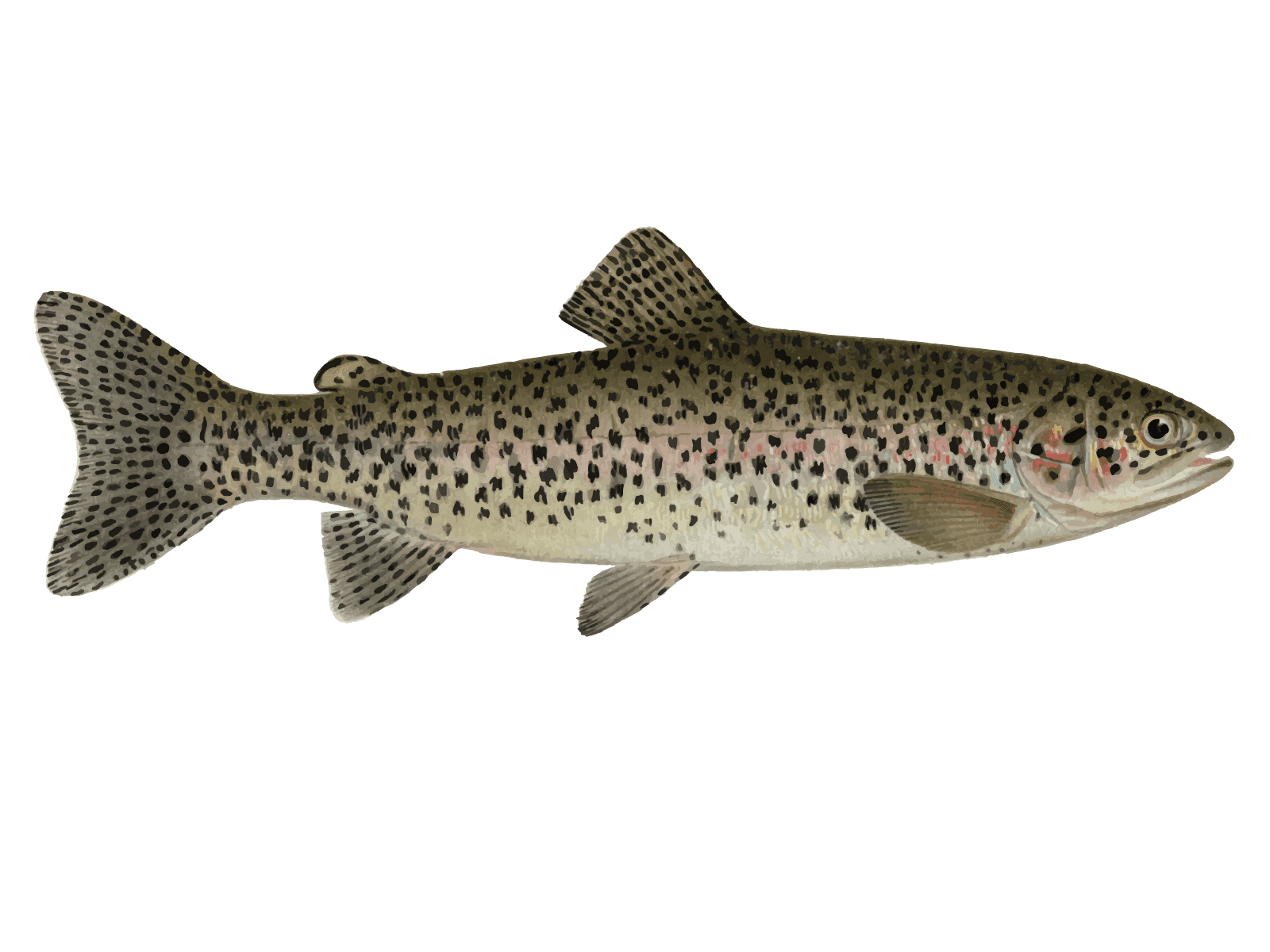
Steelhead (often called steelhead trout) is an anadromous (sea-run) form of the coastal rainbow trout that typically returns to freshwater to spawn after living two to three years in the ocean. Steelhead and Rainbow Trout are actually the same species, but they have different lifestyles. Steelhead spends part of their lives in the sea before going to rivers to breed—while rainbow trout spend their lives entirely in freshwater. Because of this, rainbow trout and steelhead are different in appearance, most noticeably in size and color. Rainbow trout derive their name from their beautiful, multi-hued coloration. Their bodies are blue, green, or yellowish, shading to silvery-white on the underside, with a horizontal pink-red stripe running from the gills to the tail and black spots along their backs. Steelhead is generally more streamlined in shape and silvery or brassy in color as adults, with black spots on their backs earning them their name. Steelhead has a streamlined body. They have black spots on the back and a pinkish-red stripe is present between the tail and the gills. Unlike rainbow trout, its body is more brassy and silvery in color. The anal fins contain 10 -12 rays.
Steelhead Trout Habitat and Distribution
Steelhead trout come and occupy freshwater lakes and streams during their lives. As a protective cover, Steelhead trout use wood, boulders, and vegetation. For spawning, Steelhead trout returns to freshwater bodies for a small period and spends most of their life in sea or estuaries.
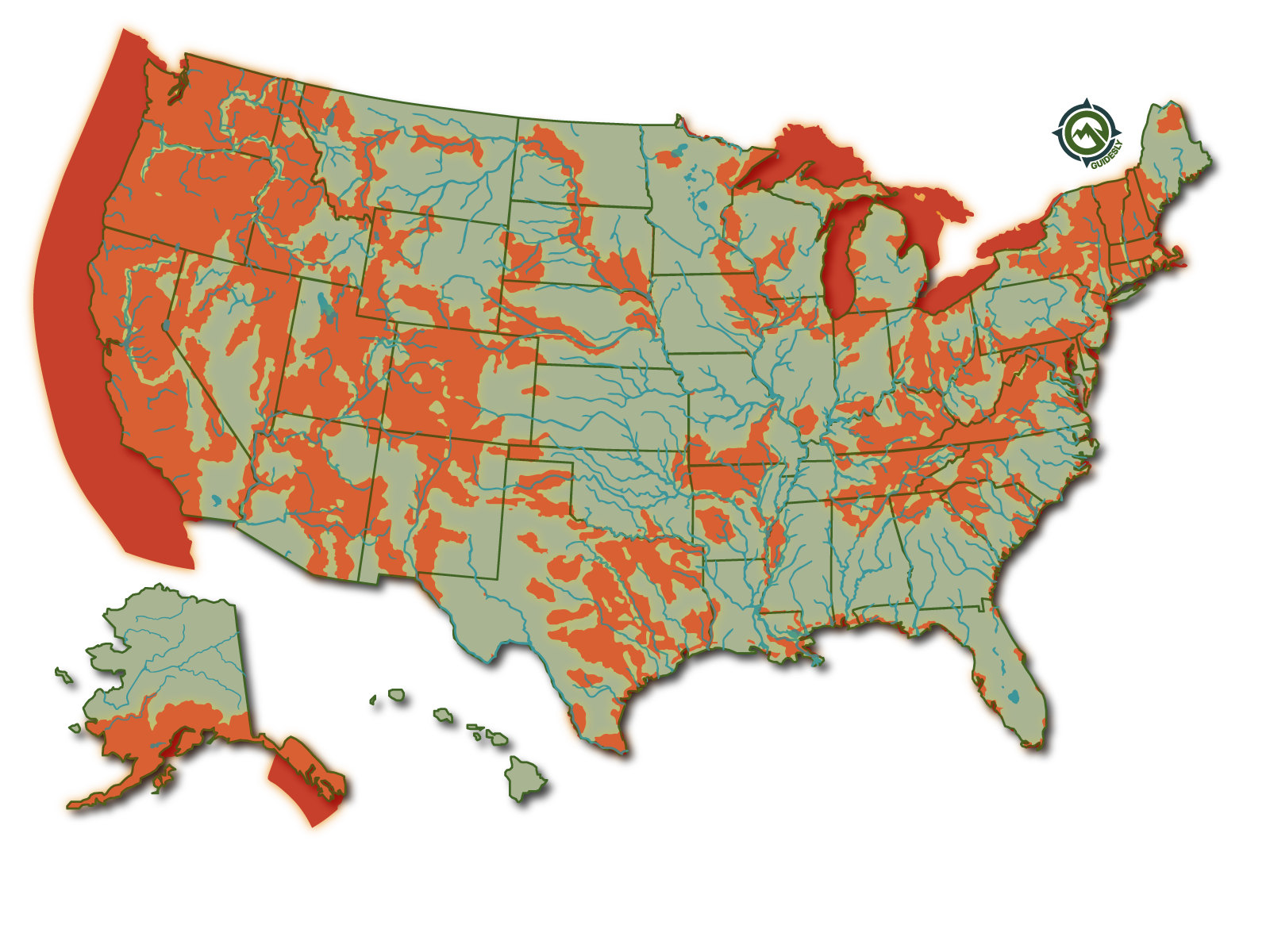
Oncorhynchus mykiss is an excellent game fish in northern America.it native to the west of Rockies. But now steelhead trout is introduced in the majority of states. It is also present on all continents. The only place that has no steelhead trout is Antarctica.
Steelhead Trout Weight and Length
The average length of Steelhead trout is 24 inches but there are reports of steelhead trout reaching 45 inches. 55 pounds is the maximum weight that is reported for steelhead trout.
Steelhead trout Interesting facts
- The life expectancy is 11 years.
- Steelhead trout spawn multiple times.
• They are migratory fish.
• Rainbow trout lives all its life in freshwater but steelhead trout spend life in the sea and only come to rivers to breed • Due to time spent in the marine environment, they develop a lot of black spots on the body.
Steelhead Trout Diet
They can eat anything like eggs, crustaceans, mollusks, small fish, and insects in adult age and when they are young they feed on zooplankton.
Steelhead Trout Best Fishing Techniques
The best techniques for this fish are drifting, plunking, back trolling, and fly fishing. For fly fishing, both double and single-handed rods can be equally effective. They can be helpful to drift a nymph rig or swing a fly in the water. Spey rods and switch rods are very popular for fly fishing. The handiest Spey rod is a 13.5-foot 7-weight rod. Steelhead fly fishing is challenging but the reward is a tremendous fight.
Steelhead Trout Baits and Lure
For wet swing, it is better to use number 6-number 8 flies that are tied thinly such as Golden Demon, Skunk, Brad’s Brat, Silver Hilton, Max Canyon, Surgeon General, Purple Peril, and Skykomish Sunrise. You can use a bomber as a dry fly.
Steelhead Trout Migration and Spawning
They show migratory behavior as they spent the majority of their adult years in the sea. They come to freshwater for spawning and then return. On the gravel of freshwater bodies such as tributaries, steelhead trout female lay eggs which are fertilized by the male. They can lay 9000 eggs at a time but it depends on the female steelhead trout size.
Steelhead Trout Season
The best time of year for catching starts in mid-fall and ends in spring. ## The Trout Family Trout are members of the family Salmonidae, order Salmoniformes. The native trout family is closely related to salmon. A top fly fishing family of fish that are both tremendous game fish and tasty eating fish. Found in small streams, large rivers, and any trout stream with the right water temperature, aquatic insects, and clean water. The trout species is usually restricted to freshwater, though a few types migrate to the sea between spawnings. Members of the trout species include Rainbow Trout, Brown Trout, Brook Trout, Lake Trout, Steelhead Trout, Bull Trout, Cutthroat Trout, Apache Trout and several other smaller species.
About the Willie Drift Boat
%2F%2Fusers%2F02b70519-8a1a-4f2a-9450-67d510aa6d10%2Fvehicle_picture%2Fimage-2024-01-29t070213.342.png&w=1920&q=75)
Vehicle Guest Capacity: 3
Manufacturer Name: Willie Drift Boat
Maximum Cruising Speed: 30
Number of Engines: 1
Horsepower per Engine: 10
Grab your fishing gear and head out for a full day of salmon and steelhead action on Oregon's stunning southern coast. Our knowledgeable guides at Matusz and Sons Guide Service know all the prime spots to cast your line and reel in the big ones. You'll spend 8 hours exploring scenic rivers and waterways, soaking in the natural beauty while trying your luck at landing some prized catches. Whether you're an experienced angler or new to fishing, this trip offers something for everyone. Our team will provide tips and tricks to improve your technique as you enjoy a relaxed day on the water. With discounted rates available, it's the perfect opportunity to experience Oregon's legendary fishing scene without breaking the bank. Bring a friend or make new ones as you share stories and laughs between casts. Don't forget your camera to capture those proud moments with your catch!