%2Ffit-in%2F250x250%2Fusers%2F02b70519-8a1a-4f2a-9450-67d510aa6d10%2Fimages%2F43a53b52-1ba9-4a20-b006-749a3e65b5b7.jpg&w=1920&q=100)
/users/02b70519-8a1a-4f2a-9450-67d510aa6d10/ratecard/474458218_122190711662133315_270809507657320046_n.jpg)
%2F300x300%2Fusers%2F02b70519-8a1a-4f2a-9450-67d510aa6d10%2Fratecard%2F474458218_122190711662133315_270809507657320046_n.jpg&w=256&q=75)
%2F300x300%2Fusers%2F02b70519-8a1a-4f2a-9450-67d510aa6d10%2Fimages%2Fcoho-salmon-fishing-or-2603.jpg&w=256&q=75)
%2F300x300%2Fusers%2F02b70519-8a1a-4f2a-9450-67d510aa6d10%2Fimages%2Fcoho-salmon-fishing-port-orford-2824.jpg&w=256&q=75)
%2F300x300%2Fusers%2F02b70519-8a1a-4f2a-9450-67d510aa6d10%2Fimages%2Fbountiful-catch-port-orford-2732.jpg&w=256&q=75)
%2F300x300%2Fusers%2F02b70519-8a1a-4f2a-9450-67d510aa6d10%2Fimages%2Fcoho-salmon-port-orford-best-2771.jpg&w=256&q=75)
%2F300x300%2Fusers%2F02b70519-8a1a-4f2a-9450-67d510aa6d10%2Fimages%2Fbest-salmon-fishing-or-2985.jpg&w=256&q=75)
%2F300x300%2Fusers%2F02b70519-8a1a-4f2a-9450-67d510aa6d10%2Fimages%2Fbountiful-fishing-port-orford-2869.jpg&w=256&q=75)
%2F300x300%2Fusers%2F02b70519-8a1a-4f2a-9450-67d510aa6d10%2Fimages%2Fbest-fishing-haul-port-orford-2832.jpg&w=256&q=75)
%2F300x300%2Fusers%2F02b70519-8a1a-4f2a-9450-67d510aa6d10%2Fimages%2Fanglers-reel-trout-salmon-2747.jpg&w=256&q=75)
%2F300x300%2Fusers%2F02b70519-8a1a-4f2a-9450-67d510aa6d10%2Fimages%2Fbountiful-salmon-haul-oregon-2877.jpg&w=256&q=75)
%2F300x300%2Fusers%2F02b70519-8a1a-4f2a-9450-67d510aa6d10%2Fimages%2Fscenic-fishing-port-orford-2658.jpg&w=256&q=75)
Premium Oregon Coast Salmon & Steelhead Charter
 Oregon
 What you will be catching:
 Steelhead Trout
- 8-hour guided salmon and steelhead fishing experience for beginners
- Professional instruction and equipment provided for groups up to 6 guests
- Family-friendly southern Oregon Coast adventure with patient guidance
Trip Pricing and Availabilities:
Full-Day Salmon & Steelhead Adventure in Southern Oregon
Get ready for a laid-back day of fishing on the stunning southern Oregon coast with Matusz and Sons Guide Service. Whether you're new to fishing or looking to brush up on your skills, this 8-hour charter is perfect for anglers of all levels. You'll be in good hands with our experienced guides who know just where to find the hottest Chinook, Coho, and steelhead action. We'll provide all the gear you need and plenty of patient instruction to help you land that trophy catch.
Trip Overview
This beginner-friendly fishing trip is all about having a good time on the water while learning the ropes of salmon and steelhead fishing. We'll cruise the coastal waters for 8 hours, hitting up some of our favorite fishing spots that are known for consistent action. Our boats can accommodate up to 6 guests, so it's a great option for small groups or families. Speaking of families, kids are welcome on this trip – just book the adult seats online and give us a heads up on how many little anglers will be joining. We'll make sure everyone has a blast, regardless of age or experience level.
What to Expect on the Water
When you hop aboard, we'll start by getting you set up with all the gear you need – rods, reels, bait, and tackle are all included in your trip. Our guides will walk you through the basics of salmon and steelhead fishing techniques, showing you how to cast, set the hook, and reel in your catch. We'll be using a mix of methods depending on the conditions and what's biting, including trolling, drift fishing, and maybe even some bank fishing if the opportunity arises. Don't worry if you're not familiar with these techniques; we're here to teach you everything you need to know. The waters off the southern Oregon coast can be a bit choppy at times, so if you're prone to seasickness, you might want to bring some motion sickness meds just in case.
Why Anglers Keep Coming Back
Folks love fishing with Matusz and Sons because we keep things relaxed and fun. We're not about the high-pressure, fish-or-die mentality you might find elsewhere. Our guides are patient teachers who are just as stoked about helping a first-timer reel in their first catch as they are about assisting seasoned anglers in landing a monster. The southern Oregon coast is a beautiful backdrop for a day on the water, and even if the fish aren't biting like crazy, you're guaranteed to see some stunning scenery and maybe even spot some wildlife like seals, sea lions, or coastal birds. Plus, there's nothing quite like the thrill of feeling that first tug on your line and the rush of adrenaline as you work to bring in a feisty salmon or steelhead.
Species You'll Want to Hook
Steelhead Trout are the stars of the show on this trip, and for good reason. These sea-run rainbow trout are known for their acrobatic fights and delicious flavor. Steelhead in Oregon can range from 5 to 20 pounds, with some monsters pushing 30 pounds or more. They're typically most active in the cooler months, from late fall through early spring, but we can find them year-round in some rivers. What makes steelhead so exciting is their unpredictable nature – one minute your line is slack, and the next you're holding on for dear life as a chrome-bright fish leaps and runs with all its might.
Chinook Salmon, also known as King Salmon, are the heavyweights of the Pacific salmon world. These bruisers can tip the scales at over 50 pounds, though 15-30 pounders are more common in our waters. Chinook are prized for their rich, fatty meat and the sheer power they display when hooked. Fall is prime time for Chinook fishing, but we also get decent spring runs. When you hook into a big Chinook, be prepared for a battle – these fish are known for their strong, determined runs that can test both your gear and your stamina.
Coho Salmon, or Silver Salmon, round out our trio of target species. While typically smaller than Chinook, averaging 6-12 pounds, Cohos make up for their size with their aggressive strikes and acrobatic fights. These fish are known for their sudden, spectacular leaps and quick direction changes that can catch even experienced anglers off guard. Coho fishing usually peaks in the late summer and early fall, offering a great chance to land some fish when the weather is still pleasant. Their meat is lighter in color and flavor compared to Chinook, but still makes for excellent table fare.
Top Catches This Season
While every fishing trip is unique, we've been having a stellar season so far. Anglers on our recent trips have been hooking into some chunky 20+ pound Chinook, feisty 8-10 pound Cohos, and a good number of hard-fighting steelhead in the 10-15 pound range. One of our guests even managed to land a trophy 28-pound steelhead last week – a true fish of a lifetime! Remember, these are wild fish we're after, so sizes and catch rates can vary, but that's all part of the excitement of fishing.
Time to Book Your Spot
If you're itching to get out on the water and try your hand at some world-class salmon and steelhead fishing, now's the time to lock in your trip with Matusz and Sons Guide Service. We've got the local know-how, the right gear, and the passion for fishing to make your day on the southern Oregon coast one to remember. Whether you're a complete newbie or an experienced angler looking for a laid-back day of fishing, we've got you covered. Just remember, our trips can fill up fast, especially during peak seasons, so don't wait too long to book. Give us a call or book online to secure your spot, and get ready for a day of rod-bending, reel-screaming action on some of Oregon's most beautiful waters. See you on the boat!
Learn more about the species
Steelhead Trout
Steelhead (Oncorhynchus mykiss) Fish Description
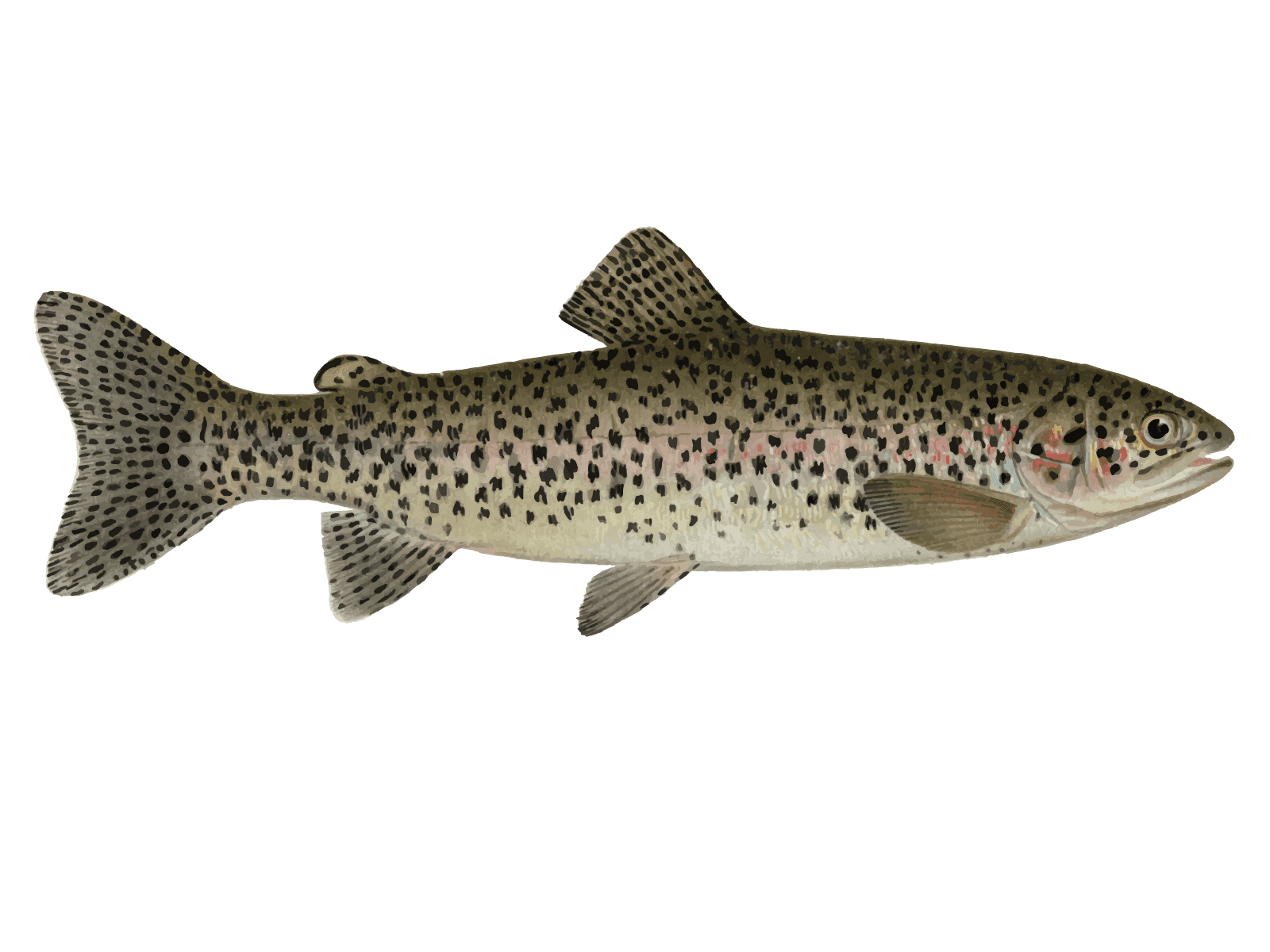
Steelhead (often called steelhead trout) is an anadromous (sea-run) form of the coastal rainbow trout that typically returns to freshwater to spawn after living two to three years in the ocean. Steelhead and Rainbow Trout are actually the same species, but they have different lifestyles. Steelhead spends part of their lives in the sea before going to rivers to breed—while rainbow trout spend their lives entirely in freshwater. Because of this, rainbow trout and steelhead are different in appearance, most noticeably in size and color. Rainbow trout derive their name from their beautiful, multi-hued coloration. Their bodies are blue, green, or yellowish, shading to silvery-white on the underside, with a horizontal pink-red stripe running from the gills to the tail and black spots along their backs. Steelhead is generally more streamlined in shape and silvery or brassy in color as adults, with black spots on their backs earning them their name. Steelhead has a streamlined body. They have black spots on the back and a pinkish-red stripe is present between the tail and the gills. Unlike rainbow trout, its body is more brassy and silvery in color. The anal fins contain 10 -12 rays.
Steelhead Trout Habitat and Distribution
Steelhead trout come and occupy freshwater lakes and streams during their lives. As a protective cover, Steelhead trout use wood, boulders, and vegetation. For spawning, Steelhead trout returns to freshwater bodies for a small period and spends most of their life in sea or estuaries.
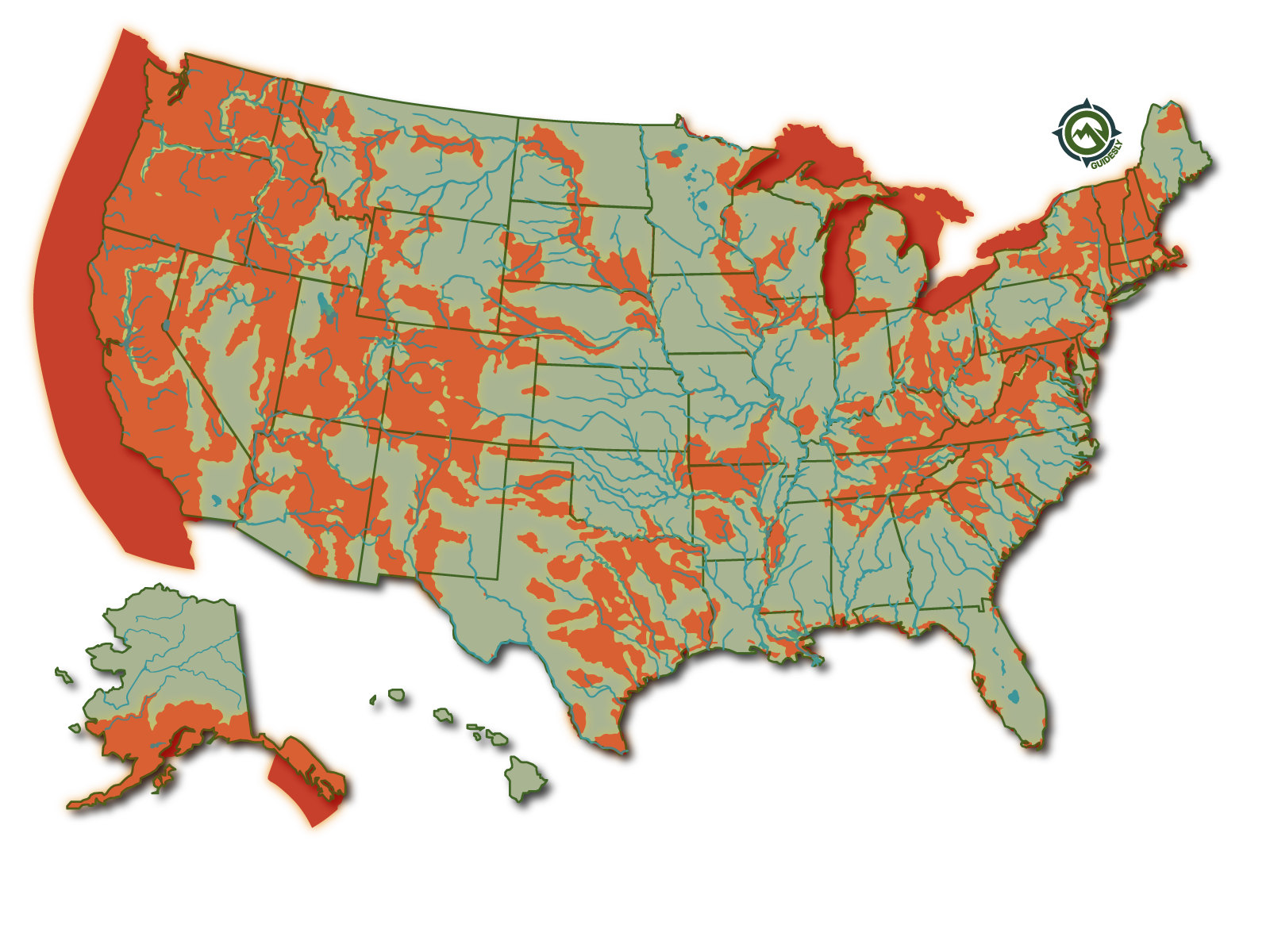
Oncorhynchus mykiss is an excellent game fish in northern America.it native to the west of Rockies. But now steelhead trout is introduced in the majority of states. It is also present on all continents. The only place that has no steelhead trout is Antarctica.
Steelhead Trout Weight and Length
The average length of Steelhead trout is 24 inches but there are reports of steelhead trout reaching 45 inches. 55 pounds is the maximum weight that is reported for steelhead trout.
Steelhead trout Interesting facts
- The life expectancy is 11 years.
- Steelhead trout spawn multiple times.
• They are migratory fish.
• Rainbow trout lives all its life in freshwater but steelhead trout spend life in the sea and only come to rivers to breed • Due to time spent in the marine environment, they develop a lot of black spots on the body.
Steelhead Trout Diet
They can eat anything like eggs, crustaceans, mollusks, small fish, and insects in adult age and when they are young they feed on zooplankton.
Steelhead Trout Best Fishing Techniques
The best techniques for this fish are drifting, plunking, back trolling, and fly fishing. For fly fishing, both double and single-handed rods can be equally effective. They can be helpful to drift a nymph rig or swing a fly in the water. Spey rods and switch rods are very popular for fly fishing. The handiest Spey rod is a 13.5-foot 7-weight rod. Steelhead fly fishing is challenging but the reward is a tremendous fight.
Steelhead Trout Baits and Lure
For wet swing, it is better to use number 6-number 8 flies that are tied thinly such as Golden Demon, Skunk, Brad’s Brat, Silver Hilton, Max Canyon, Surgeon General, Purple Peril, and Skykomish Sunrise. You can use a bomber as a dry fly.
Steelhead Trout Migration and Spawning
They show migratory behavior as they spent the majority of their adult years in the sea. They come to freshwater for spawning and then return. On the gravel of freshwater bodies such as tributaries, steelhead trout female lay eggs which are fertilized by the male. They can lay 9000 eggs at a time but it depends on the female steelhead trout size.
Steelhead Trout Season
The best time of year for catching starts in mid-fall and ends in spring. ## The Trout Family Trout are members of the family Salmonidae, order Salmoniformes. The native trout family is closely related to salmon. A top fly fishing family of fish that are both tremendous game fish and tasty eating fish. Found in small streams, large rivers, and any trout stream with the right water temperature, aquatic insects, and clean water. The trout species is usually restricted to freshwater, though a few types migrate to the sea between spawnings. Members of the trout species include Rainbow Trout, Brown Trout, Brook Trout, Lake Trout, Steelhead Trout, Bull Trout, Cutthroat Trout, Apache Trout and several other smaller species.
About the Willie Drift Boat
%2F%2Fusers%2F02b70519-8a1a-4f2a-9450-67d510aa6d10%2Fvehicle_picture%2Fimage-2024-01-29t070213.342.png&w=1920&q=75)
Vehicle Guest Capacity: 3
Manufacturer Name: Willie Drift Boat
Maximum Cruising Speed: 30
Number of Engines: 1
Horsepower per Engine: 10
Hop aboard for a relaxed day of salmon and steelhead fishing on the beautiful rivers of southern Oregon. Your guide from Matusz and Sons will show you the ropes and take you to some prime fishing spots known for Chinook, Coho, and steelhead. Whether you're brand new to fishing or just looking to brush up your skills, this trip is perfect for learning in a laid-back setting. The boat has room for up to 6 people, so bring along family or friends. Kids are welcome too - just let the guide know how many will be joining. All the gear you need is provided, so you can focus on enjoying the scenery and trying your luck at landing a big one. With 8 full hours on the water, you'll have plenty of time to soak in the experience and hopefully reel in some fish to brag about later.