%2Ffit-in%2F250x250%2Fusers%2F02b70519-8a1a-4f2a-9450-67d510aa6d10%2Fimages%2F43a53b52-1ba9-4a20-b006-749a3e65b5b7.jpg&w=1920&q=100)
/users/02b70519-8a1a-4f2a-9450-67d510aa6d10/ratecard/image-2024-01-29t065708.844.png)
%2F300x300%2Fusers%2F02b70519-8a1a-4f2a-9450-67d510aa6d10%2Fratecard%2Fimage-2024-01-29t065708.844.png&w=256&q=75)
%2F300x300%2Fusers%2F02b70519-8a1a-4f2a-9450-67d510aa6d10%2Fimages%2Fcoho-salmon-fishing-or-2603.jpg&w=256&q=75)
%2F300x300%2Fusers%2F02b70519-8a1a-4f2a-9450-67d510aa6d10%2Fimages%2Fcoho-salmon-fishing-port-orford-2824.jpg&w=256&q=75)
%2F300x300%2Fusers%2F02b70519-8a1a-4f2a-9450-67d510aa6d10%2Fimages%2Fbountiful-catch-port-orford-2732.jpg&w=256&q=75)
%2F300x300%2Fusers%2F02b70519-8a1a-4f2a-9450-67d510aa6d10%2Fimages%2Fcoho-salmon-port-orford-best-2771.jpg&w=256&q=75)
%2F300x300%2Fusers%2F02b70519-8a1a-4f2a-9450-67d510aa6d10%2Fimages%2Fbest-salmon-fishing-or-2985.jpg&w=256&q=75)
%2F300x300%2Fusers%2F02b70519-8a1a-4f2a-9450-67d510aa6d10%2Fimages%2Fbountiful-fishing-port-orford-2869.jpg&w=256&q=75)
%2F300x300%2Fusers%2F02b70519-8a1a-4f2a-9450-67d510aa6d10%2Fimages%2Fbest-fishing-haul-port-orford-2832.jpg&w=256&q=75)
%2F300x300%2Fusers%2F02b70519-8a1a-4f2a-9450-67d510aa6d10%2Fimages%2Fanglers-reel-trout-salmon-2747.jpg&w=256&q=75)
%2F300x300%2Fusers%2F02b70519-8a1a-4f2a-9450-67d510aa6d10%2Fimages%2Fbountiful-salmon-haul-oregon-2877.jpg&w=256&q=75)
%2F300x300%2Fusers%2F02b70519-8a1a-4f2a-9450-67d510aa6d10%2Fimages%2Fscenic-fishing-port-orford-2658.jpg&w=256&q=75)
Top-Rated Oregon Coast Fishing Charters
 Oregon
 What you will be catching:
 Steelhead Trout
- 8-hour guided salmon and steelhead fishing on Oregon's southern coast
- Experienced guides provide expert knowledge of prime river locations
- Accommodates up to 4 guests with $100 discount and family-friendly options
Trip Pricing and Availabilities:
Reel in the Big Ones: Oregon Coast Salmon & Steelhead
Get ready for a day of non-stop action on the southern Oregon coast with Matusz and Sons Guide Service. We're talking 8 solid hours chasing some of the most prized fish in the Pacific Northwest. Whether you're a seasoned angler or just getting your feet wet, our guides know these waters like the back of their hand and will put you on the fish. And hey, we've even got a sweet $100 discount running right now. So grab your gear, bring the family (just let us know how many kiddos are coming), and let's make some waves!
What's the Deal on the Water?
Picture this: You're cruising along the rugged Oregon coastline, rod in hand, waiting for that telltale tug. Our seasoned guides will take you to the honey holes where salmon and steelhead are known to hang out. We're talking about spots that only locals know about – the kind of places that make fish stories come true. You'll be using top-notch gear and learning tricks of the trade that'll up your fishing game. And let's be real, even if the fish aren't biting (which is rare), the views alone are worth the trip. Towering cliffs, secluded beaches, and if you're lucky, maybe even a whale sighting or two.
Casting Call: Tips and Techniques
Alright, let's talk shop. We'll be using a mix of techniques depending on where the fish are biting. Could be some trolling with downriggers, maybe some drift fishing if the conditions are right. Our guides are masters at reading the water, so they'll set you up for success. We're talking about everything from choosing the right bait (hello, roe bags and cut plugs) to perfecting your drift. And don't worry if you're new to this – our guides are patient teachers. By the end of the day, you'll be talking about back-bouncing and hot-shotting like a pro.
Fish Tales: What's Biting?
Let's break down what you might be reeling in. First up, the mighty Chinook salmon. These bad boys are the heavyweights of the salmon world, known to tip the scales at over 50 pounds. They're a bucket list fish for many anglers, and for good reason. The fight they put up is legendary. Then there's the coho salmon – smaller than Chinooks, but what they lack in size, they make up for in acrobatics. Watching a coho leap clear out of the water is a sight you won't forget.
But the real star of our show? Steelhead. These sea-run rainbow trout are the stuff of angling dreams. They're notoriously challenging to catch, which is why landing one is such a rush. Steelhead in this area typically range from 5 to 15 pounds, but it's their fierce fighting spirit that'll really get your heart racing. The best time to target them? Winter and early spring are prime, but we see some summer runs too. Trust me, once you've felt the power of a steelhead on the end of your line, you'll be hooked for life.
Time to Lock in Your Spot
Look, I could go on all day about the thrill of fishing these waters, but nothing beats experiencing it firsthand. Whether you're looking to scratch that fishing itch, want to introduce the kids to the sport, or just need a day away from the grind, this trip's got you covered. Remember, we've got that $100 discount going, so now's the time to jump on it. Give us a shout, let us know how many folks you're bringing (especially the little ones), and we'll get you set up for a day on the water you won't forget. The fish are calling – are you ready to answer?
Learn more about the species
Steelhead Trout
Steelhead (Oncorhynchus mykiss) Fish Description
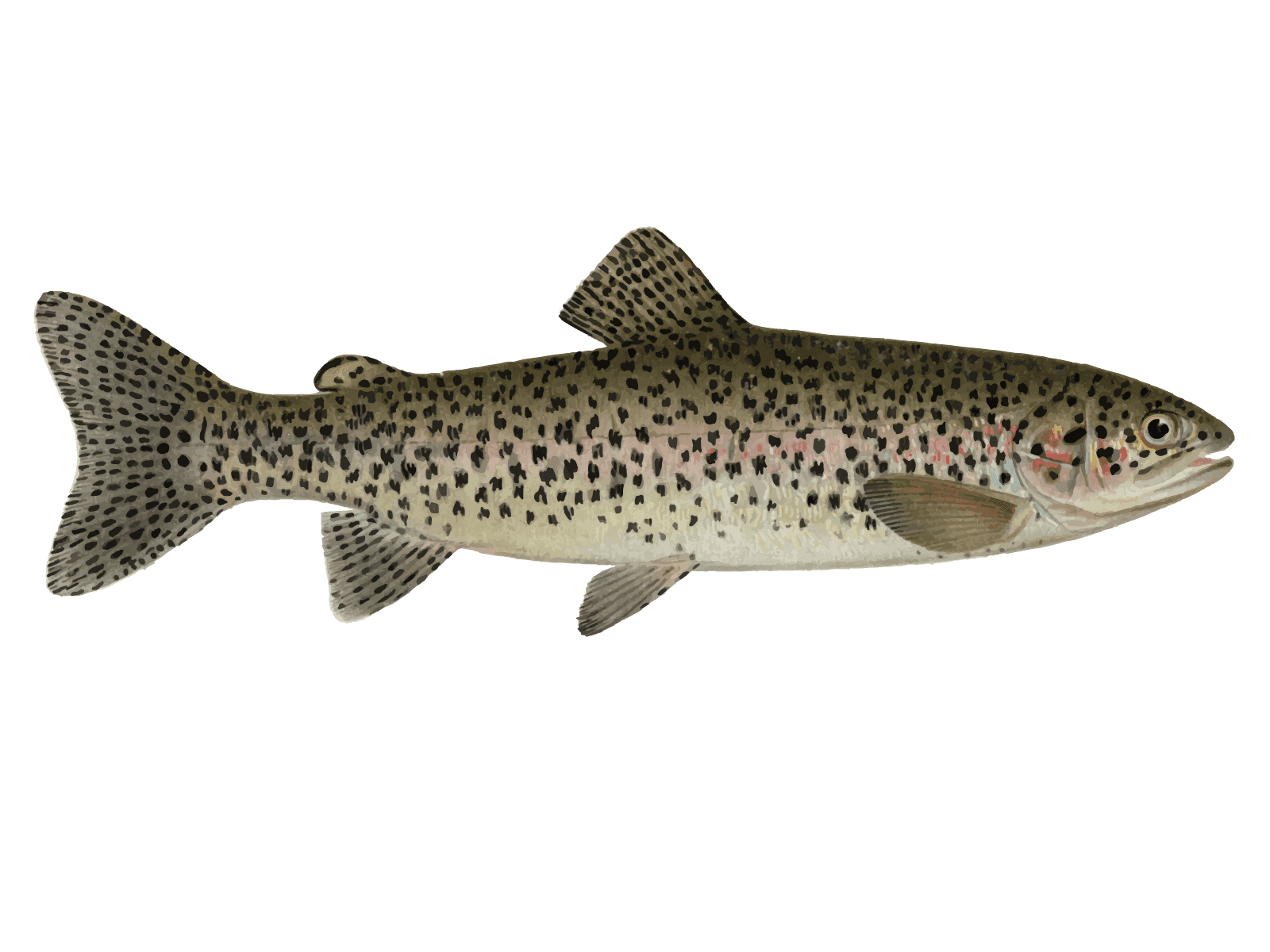
Steelhead (often called steelhead trout) is an anadromous (sea-run) form of the coastal rainbow trout that typically returns to freshwater to spawn after living two to three years in the ocean. Steelhead and Rainbow Trout are actually the same species, but they have different lifestyles. Steelhead spends part of their lives in the sea before going to rivers to breed—while rainbow trout spend their lives entirely in freshwater. Because of this, rainbow trout and steelhead are different in appearance, most noticeably in size and color. Rainbow trout derive their name from their beautiful, multi-hued coloration. Their bodies are blue, green, or yellowish, shading to silvery-white on the underside, with a horizontal pink-red stripe running from the gills to the tail and black spots along their backs. Steelhead is generally more streamlined in shape and silvery or brassy in color as adults, with black spots on their backs earning them their name. Steelhead has a streamlined body. They have black spots on the back and a pinkish-red stripe is present between the tail and the gills. Unlike rainbow trout, its body is more brassy and silvery in color. The anal fins contain 10 -12 rays.
Steelhead Trout Habitat and Distribution
Steelhead trout come and occupy freshwater lakes and streams during their lives. As a protective cover, Steelhead trout use wood, boulders, and vegetation. For spawning, Steelhead trout returns to freshwater bodies for a small period and spends most of their life in sea or estuaries.
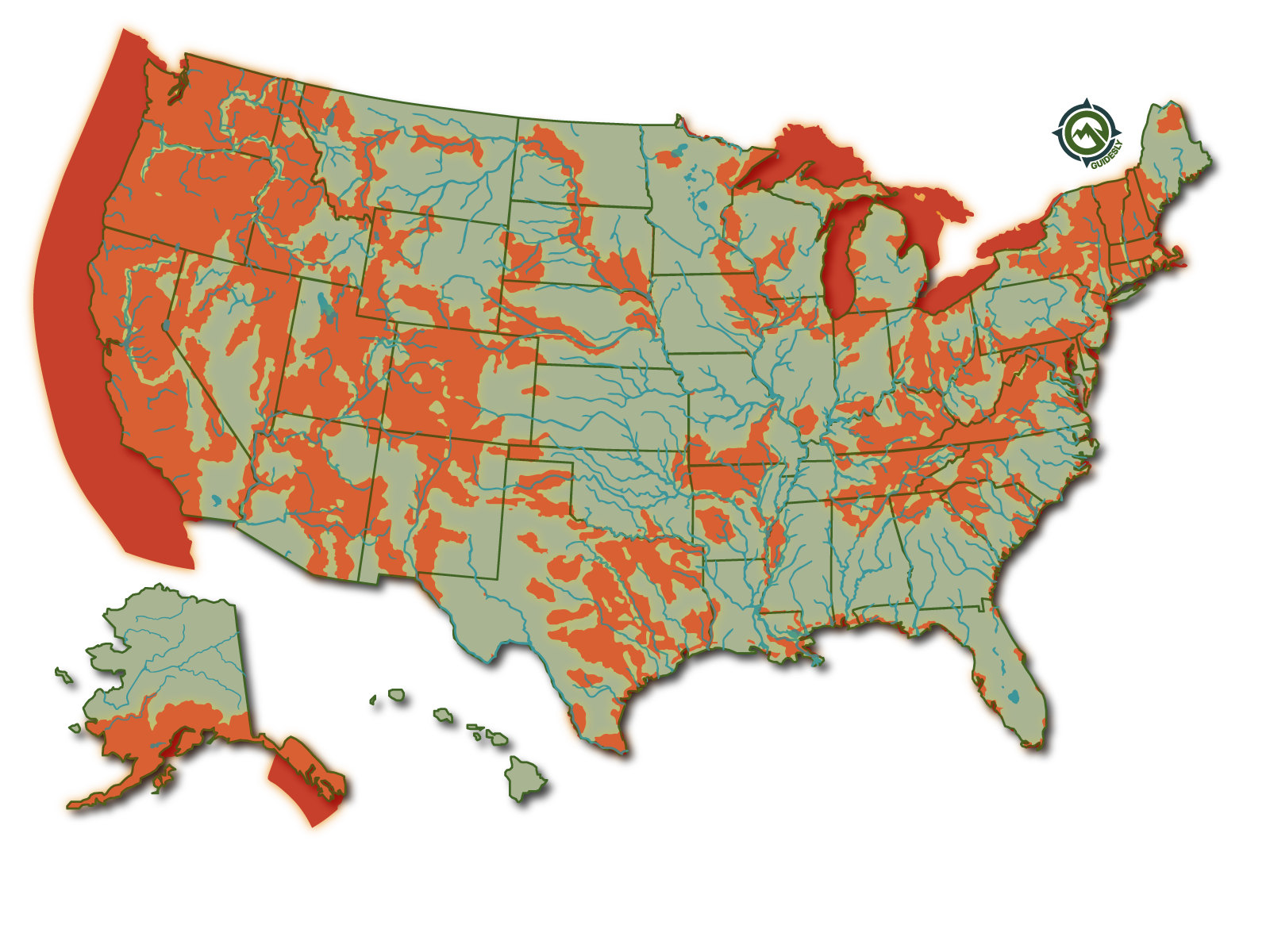
Oncorhynchus mykiss is an excellent game fish in northern America.it native to the west of Rockies. But now steelhead trout is introduced in the majority of states. It is also present on all continents. The only place that has no steelhead trout is Antarctica.
Steelhead Trout Weight and Length
The average length of Steelhead trout is 24 inches but there are reports of steelhead trout reaching 45 inches. 55 pounds is the maximum weight that is reported for steelhead trout.
Steelhead trout Interesting facts
- The life expectancy is 11 years.
- Steelhead trout spawn multiple times.
• They are migratory fish.
• Rainbow trout lives all its life in freshwater but steelhead trout spend life in the sea and only come to rivers to breed • Due to time spent in the marine environment, they develop a lot of black spots on the body.
Steelhead Trout Diet
They can eat anything like eggs, crustaceans, mollusks, small fish, and insects in adult age and when they are young they feed on zooplankton.
Steelhead Trout Best Fishing Techniques
The best techniques for this fish are drifting, plunking, back trolling, and fly fishing. For fly fishing, both double and single-handed rods can be equally effective. They can be helpful to drift a nymph rig or swing a fly in the water. Spey rods and switch rods are very popular for fly fishing. The handiest Spey rod is a 13.5-foot 7-weight rod. Steelhead fly fishing is challenging but the reward is a tremendous fight.
Steelhead Trout Baits and Lure
For wet swing, it is better to use number 6-number 8 flies that are tied thinly such as Golden Demon, Skunk, Brad’s Brat, Silver Hilton, Max Canyon, Surgeon General, Purple Peril, and Skykomish Sunrise. You can use a bomber as a dry fly.
Steelhead Trout Migration and Spawning
They show migratory behavior as they spent the majority of their adult years in the sea. They come to freshwater for spawning and then return. On the gravel of freshwater bodies such as tributaries, steelhead trout female lay eggs which are fertilized by the male. They can lay 9000 eggs at a time but it depends on the female steelhead trout size.
Steelhead Trout Season
The best time of year for catching starts in mid-fall and ends in spring. ## The Trout Family Trout are members of the family Salmonidae, order Salmoniformes. The native trout family is closely related to salmon. A top fly fishing family of fish that are both tremendous game fish and tasty eating fish. Found in small streams, large rivers, and any trout stream with the right water temperature, aquatic insects, and clean water. The trout species is usually restricted to freshwater, though a few types migrate to the sea between spawnings. Members of the trout species include Rainbow Trout, Brown Trout, Brook Trout, Lake Trout, Steelhead Trout, Bull Trout, Cutthroat Trout, Apache Trout and several other smaller species.
About the Willie Drift Boat
%2F%2Fusers%2F02b70519-8a1a-4f2a-9450-67d510aa6d10%2Fvehicle_picture%2Fimage-2024-01-29t070213.342.png&w=1920&q=75)
Vehicle Guest Capacity: 3
Manufacturer Name: Willie Drift Boat
Maximum Cruising Speed: 30
Number of Engines: 1
Horsepower per Engine: 10
Ready for an awesome day of fishing on Oregon's southern coast? Hop aboard with Matusz and Sons Guide Service for 8 hours of salmon and steelhead action. Our seasoned guides know all the sweet spots to help you reel in some beauties. Whether you're a pro angler or just getting your feet wet, we'll make sure you have a blast out on the water. Picture yourself surrounded by Oregon's gorgeous coastal scenery as you cast your line and wait for that big bite. It's the perfect way to spend a day soaking up nature and maybe landing the catch of a lifetime. Don't forget - we're offering a sweet $100 discount on these trips. Just book your adult seats and let the guide know how many kiddos are coming along. Grab your gear and let's hit the river for some unforgettable fishing fun!